


Filters

Content Type
Industry
Capability
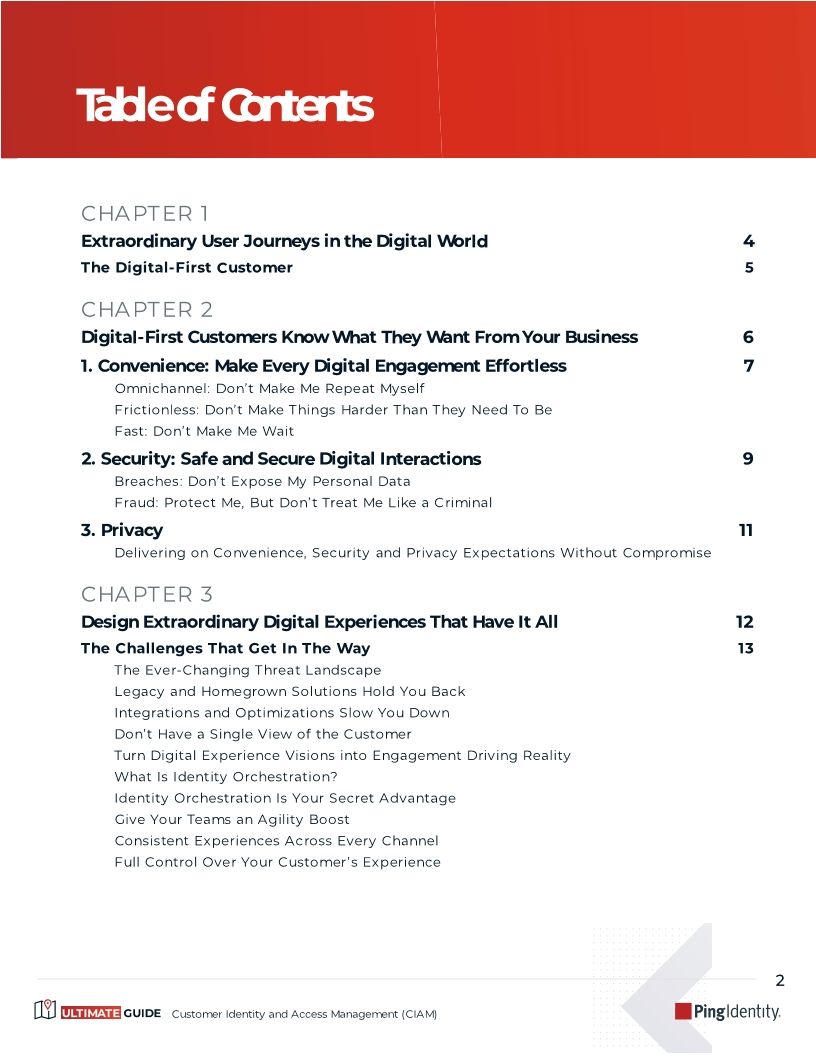
Ultimate Guide to Customer Identity and Access Management (CIAM)
 Download


Recommended For You
Frequently Asked Questions
Find answers to common questions about this content
Architect
What are the main challenges organizations face when trying to balance convenience and security in customer identity?
Organizations often struggle to balance convenience and security because legacy tools, complexity, and lack of resources make it difficult to weave customer identity services into a cohesive journey. This results in friction for customers, such as complicated password policies or inconsistent experiences across channels, which can lead to abandonment of the brand. Understanding these challenges is key to designing user journeys that are both seamless and secure.
Why is customer identity considered foundational to delivering extraordinary digital user journeys?
Customer identity is foundational because it enables seamless and secure interactions across all digital channels, allowing customers to create accounts, log in, and update preferences easily. This balance between convenience and security unlocks innovation returns by reducing friction and building trust, which drives long-term engagement and loyalty.
What features should I look for in a customer identity platform to support omnichannel experiences?
Look for features that enable unified identity management across multiple digital channels, such as synchronized profile and preference updates, consistent authentication methods, and support for seamless data sharing between applications. The platform should facilitate a single view of the customer to avoid repeated data entry and ensure personalized experiences.
How important is support for passwordless authentication in evaluating customer identity solutions?
Support for passwordless authentication is important because it reduces friction and enhances security by replacing complex passwords with biometrics or other secure methods. This capability aligns with customer expectations for convenience and helps prevent abandonment due to difficult login processes, making it a critical feature to evaluate.
How can I validate that a customer identity solution will deliver consistent omnichannel experiences?
Validation can include testing whether updates to customer data and preferences propagate instantly and accurately across all digital channels. Also, assess if the platform supports unified authentication and personalization features that maintain consistency regardless of the access point, ensuring a seamless user journey.
Digital Leader
What challenges do organizations face when trying to balance convenience and security in digital customer journeys?
Organizations often struggle to find the right balance between convenience and security because legacy tools, complexity, and limited resources make it difficult to weave customer identity services into a seamless journey. This struggle can introduce friction that frustrates customers, leading to abandonment. For example, complicated password policies intended to enhance security can actually create barriers that drive customers away. Understanding these challenges is the first step to designing digital experiences that satisfy customers’ expectations for both ease and protection.
Why is customer identity important for creating extraordinary digital user journeys?
Customer identity is foundational because it enables seamless and secure interactions across all digital channels. When done right, it transforms the online experience by simplifying account creation, login, and preference updates, which customers expect to be effortless. This not only reduces friction but also supports long-term engagement by meeting customers where they are digitally. Essentially, customer identity helps businesses deliver the convenience and security that modern digital-first customers demand.
What features should I look for in a customer identity solution to reduce friction?
Look for features like passwordless authentication options that replace complex passwords with biometrics or other secure methods, and the ability to unify customer data across all digital channels to provide consistent experiences. These features help eliminate common pain points such as password resets and repeated data entry, making the user journey smoother and more secure.
How do unified customer experiences across channels benefit digital engagement?
Unified experiences ensure that customer updates—like changing a name or opting out of emails—are reflected everywhere, preventing frustration and reinforcing trust. This consistency makes customers feel recognized and valued, encouraging repeat engagement and loyalty. It also simplifies management internally by reducing data silos and conflicting information.
What should I consider when implementing passwordless authentication to ensure a smooth rollout?
When implementing passwordless authentication, focus on choosing secure methods like biometrics that customers find easy to use. Ensure the solution integrates across all digital channels to maintain consistency. Also, plan for user education to ease adoption and monitor for any friction points during rollout to quickly address issues. This approach helps reduce friction and supports a secure, seamless user experience.
How can unifying customer data across channels reduce operational complexity during rollout?
Unifying customer data ensures that updates and preferences are synchronized across all platforms, reducing the need for manual reconciliation and minimizing errors. This streamlines operations by preventing duplicated efforts and inconsistent data, which can complicate rollout and frustrate customers. A unified approach supports smoother implementation and ongoing management.